# Tex Mex Burrito vs Traditional Burrito: What's Different?
Order a burrito in two different cities and you might end up with two completely different meals. One arrives wrapped tight and modest in size, filled with just a few honest ingredients. The other shows up the size of a forearm, smothered in cheese, sauce, and everything else the kitchen could fit inside. Both are called a burrito, yet they come from two very different food traditions. On the blog over at Burro Blanco, this exact mix-up gets untangled, walking readers through what actually separates **[Tex Mex food](https://burroblanco.ae)** from the traditional Mexican version most people assume it's copying.

## Where Each Style Actually Comes From
The traditional burrito has roots that trace back to northern Mexico, where the idea was always about portability and simplicity. A soft flour tortilla wrapped around beans, meat, or a simple filling was food meant to travel — something a laborer could eat quickly without a plate or fork. It wasn't designed to be a full meal in one bite; it was practical, modest, and built around a handful of ingredients that worked well together.
Tex Mex food, on the other hand, developed north of the border, largely in Texas, as Mexican cooking blended with American tastes and ingredients over generations. Burro Blanco's blog does a solid job explaining that this isn't a knockoff version of the original — it's its own distinct food culture, shaped by decades of overlap between Mexican immigrant communities and American kitchens. The result is a style that leans bigger, bolder, and heavier on add-ons that traditional Mexican cooking never included in the first place.
## Size and Structure
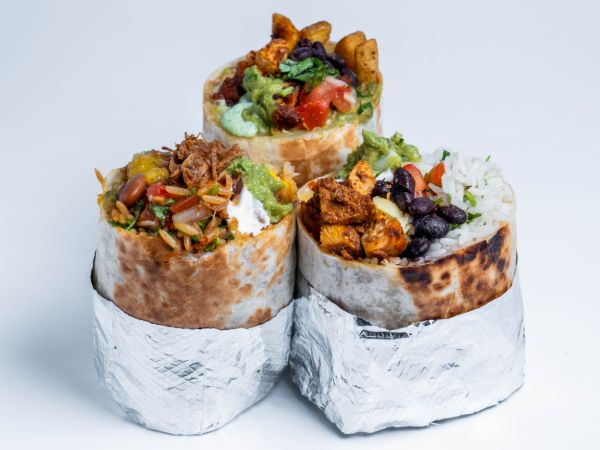
This is usually the first thing people notice. A traditional burrito is compact, often no wider than a hand, because it was never meant to be stuffed to the point of falling apart. Tex Mex versions went the opposite direction, growing into the oversized, ingredient-packed rolls most people picture when they hear the word "burrito" today.
That extra size comes from what's stuffed inside. Traditional fillings tend to stay simple — usually one protein, maybe beans or rice, and a light sauce. Tex Mex burritos pile in rice, beans, multiple proteins, melted cheese, sour cream, and often a heavy sauce or salsa poured right over the top before it's wrapped.
## Cheese, Sauce, and the Ingredients That Changed Everything
Cheese is probably the biggest giveaway. Traditional Mexican cooking uses cheese sparingly, often as a light garnish rather than a core ingredient. Tex Mex food flipped that completely, making melted cheese — and often cheese sauce — a defining feature of the burrito itself.
The same goes for sauces. Traditional versions might use a fresh salsa or a light drizzle, keeping the focus on the filling. Tex Mex leans into heavier, cooked sauces, sometimes smothering the entire burrito before it's served, closer to what you'd see with an enchilada than a street-style wrap.
## Why the Difference Actually Matters
None of this makes one version better than the other; it just means they're solving different problems. Traditional Mexican burritos were built around portability and balance, letting quality ingredients speak for themselves. Tex Mex food was built around indulgence, taking the same base idea and turning it into something heartier, cheesier, and more filling — a style that grew alongside American comfort food rather than trying to replace what came before it.
Burro Blanco's blog makes a fair point in noting that understanding this history changes how people order. Someone craving an authentic Mexican burrito is usually after something lighter and more ingredient-focused, while someone craving the Tex Mex experience wants that loaded, cheese-heavy bite that's become a comfort food staple in its own right.
## Tacos Tell the Same Story
The burrito isn't the only dish caught in this divide. Tacos follow a similar pattern — traditional Mexican tacos usually stick to simple corn tortillas, a single protein, onion, and cilantro, while Tex Mex versions often bring in hard shells, shredded cheese, and heavier toppings. It's the same story of two food cultures shaping the same base dish in different directions, and it shows how deep the Tex Mex and traditional divide really runs across Mexican food as a whole.
## Final Thoughts
The gap between a Tex Mex burrito and a traditional one comes down to history, not quality. One grew out of northern Mexico's need for something simple and portable; the other grew out of a cultural blend north of the border that turned the same idea into something bigger and richer. Both belong in the conversation about great Mexican food, and both are worth trying with a clear sense of where each one actually comes from — something the team behind Burro Blanco clearly understands well, given how much thought goes into the tacos and burritos they put together every day.
For more information,
Contacts – +**97144576051**
Instagram: [**burroblancouae**](https://instagram.com/burroblancouae)
Location: [**View All Burro Blanco Locations**](https://burroblanco.ae/locate-us)